简体中文
简体中文



Sulfur (Sulphur) - A Versatile and Essential Chemical Product
1. Product Overview
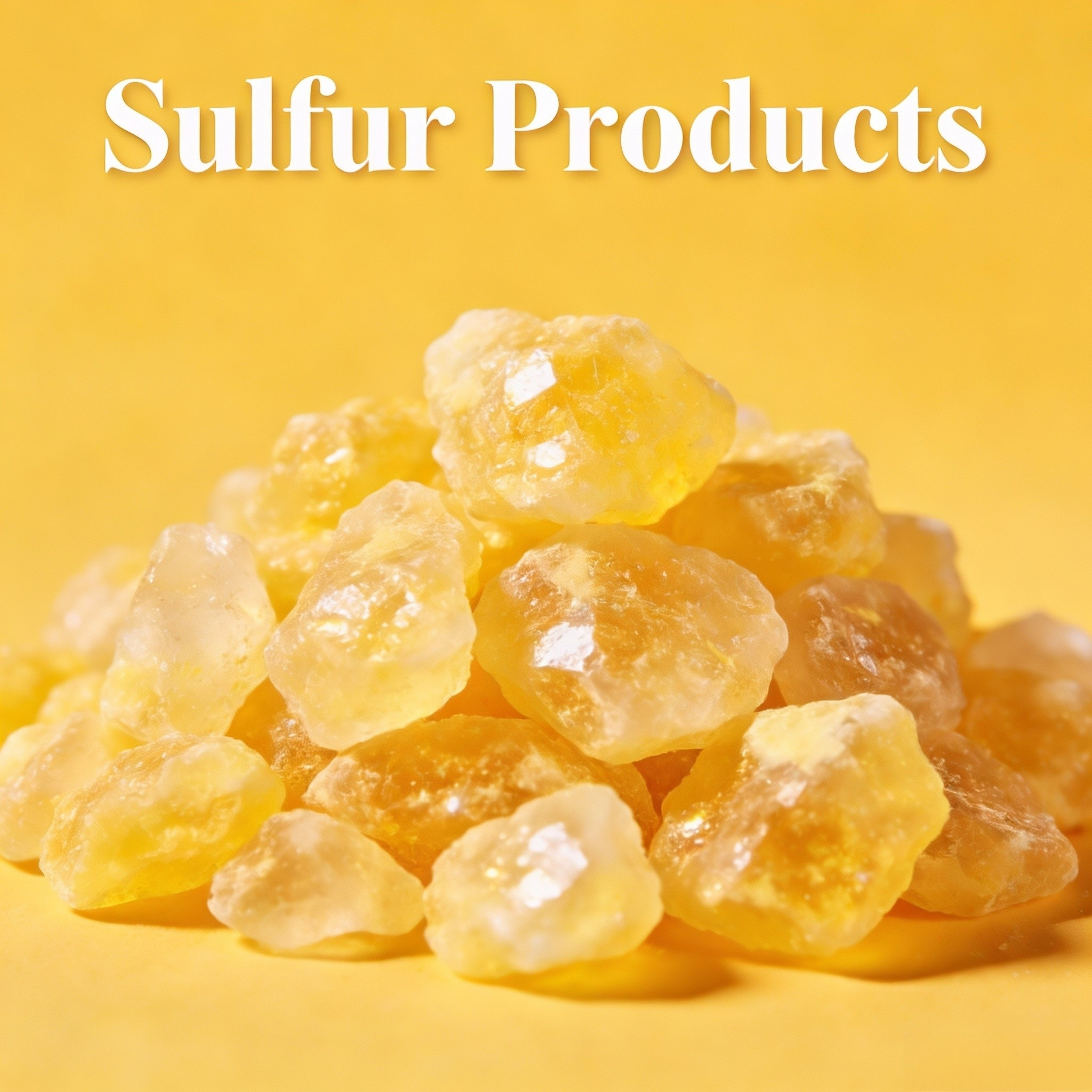
Sulfur, with the chemical formula S8 and CAS number 7704-34-9, is a non-metallic element that exists naturally in various forms. It is typically found as a pale yellow crystalline solid or powder with a characteristic faint odor of rotten eggs. This versatile chemical has a wide range of applications across multiple industries due to its unique physical and chemical properties.

2. Physical and Chemical Properties
Property | Value |
Appearance | Pale yellow crystalline solid or fine powder |
Melting Point | 114 °C (237 °F) |
Boiling Point | 445 °C (833 °F) |
Density | 2.36 g/cm³ |
Solubility | Insoluble in water, but soluble in carbon disulfide and other organic solvents |
Flash Point | 168 °C (334 °F) |
Autoignition Temperature | 450 °F (232 °C) |
Sulfur is a highly reactive element that exhibits both oxidizing and reducing properties. It burns with a pale blue flame, producing sulfur dioxide gas, and can react with many metals to form sulfides.
3. Product Forms
We offer sulfur in various forms to meet different application requirements:
•Solid Sulfur: Available as lumps, granules, pellets, or powder
•Molten Sulfur: Transported and handled at elevated temperatures (typically 290°F) to maintain liquid state
4. Key Applications
4.1 Chemical Industry
Sulfur is a fundamental raw material in the chemical industry, primarily used for:
•Production of sulfuric acid, one of the most widely used industrial chemicals
•Manufacturing of sulfur dioxide, sulfites, and other sulfur-based chemicals
•Production of carbon disulfide, used in the manufacturing of cellophane and rayon
4.2 Petroleum Refining
In the petroleum industry, sulfur is used to:
•Remove sulfur compounds from crude oil and natural gas in a process called desulfurization
•Improve the quality and environmental performance of petroleum products

4.3 Pulp and Paper Manufacturing
Sulfur plays a crucial role in the pulp and paper industry for:
•Production of sulfur-based chemicals used in the kraft pulping process
•Bleaching of pulp to achieve the desired brightness

4.4 Agricultural Applications
•Used as a fungicide and pesticide to control various plant diseases and pests
•Applied as a soil amendment to adjust pH levels and improve soil quality
•Used in the production of sulfur-containing fertilizers
4.5 Rubber Industry
•Essential as a vulcanizing agent for natural and synthetic rubbers
•Improves the strength, elasticity, and durability of rubber products
•Used in the manufacturing of tires, hoses, belts, and other rubber goods
4.6 Other Applications
•Production of matches, fireworks, and explosives
•Used in the manufacturing of dyes, pigments, and pharmaceuticals
•Applied in water treatment processes to remove contaminants
•Used in the production of sulfur-based cosmetics and personal care products
5. Safety and Handling Considerations
Sulfur is classified as a hazardous chemical due to its flammable nature and potential health hazards. Important safety considerations include:
•Flammability: Sulfur is highly flammable, especially in powder form, and can form explosive mixtures with air. Keep away from heat, sparks, and open flames.
•Health Hazards: Inhalation of sulfur dust may cause respiratory irritation. Prolonged exposure can lead to symptoms such as fatigue, headache, and dizziness. Skin and eye contact may cause irritation.
•Storage: Store in a cool, dry, well-ventilated area away from incompatible substances such as strong oxidizers.
•Transportation: Follow all applicable regulations for transporting hazardous materials. Solid sulfur is classified as UN 1350, while molten sulfur is classified as UN 2448.
6. Quality Assurance
Our sulfur products meet the highest industry standards, with a purity level of 99.5% or higher. We adhere to strict quality control measures throughout the production and supply chain to ensure consistent product quality and performance.
For more information about our sulfur products or to request a quote, please contact our sales team.